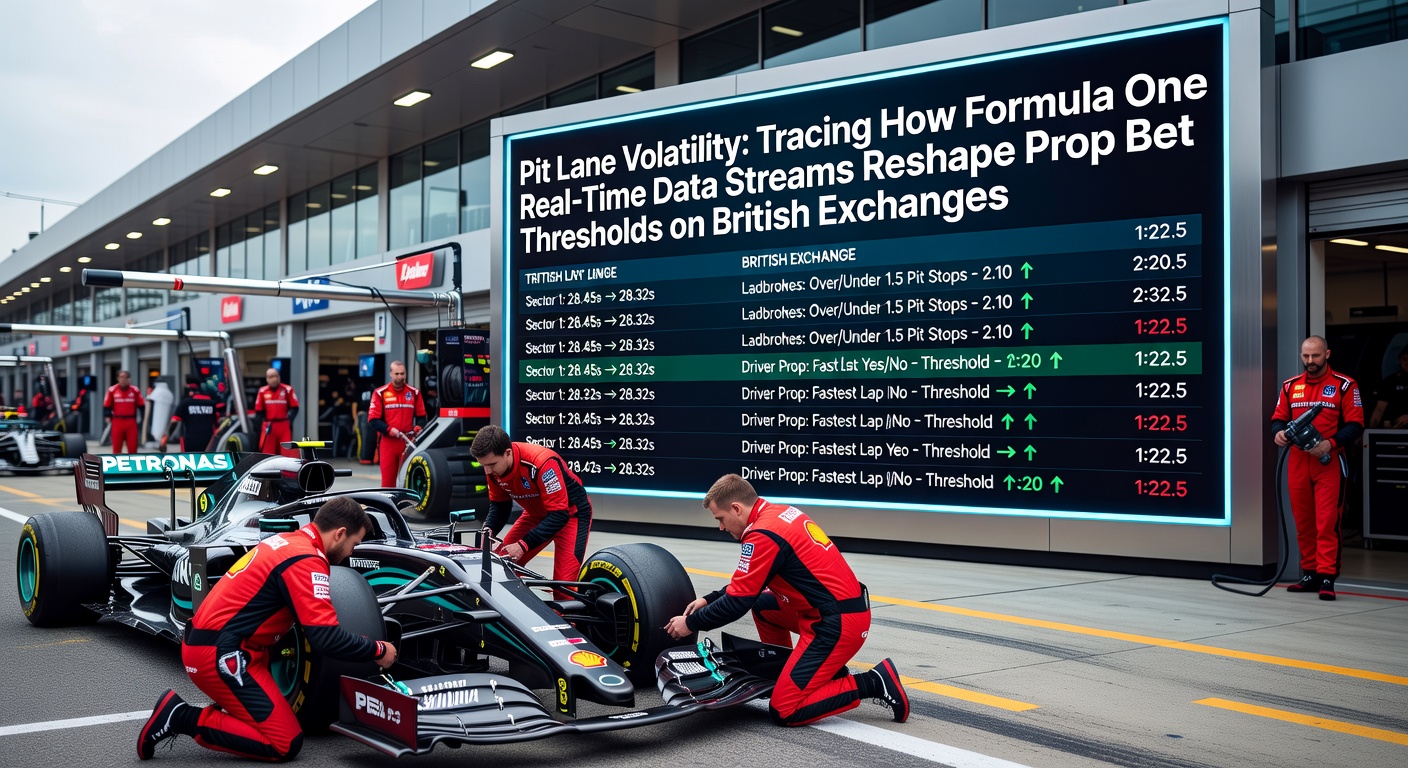
Pit Lane Volatility: Tracing How Formula One Real-Time Data Streams Reshape Prop Bet Thresholds on British Exchanges
Real-Time Data Integration in Modern Formula One
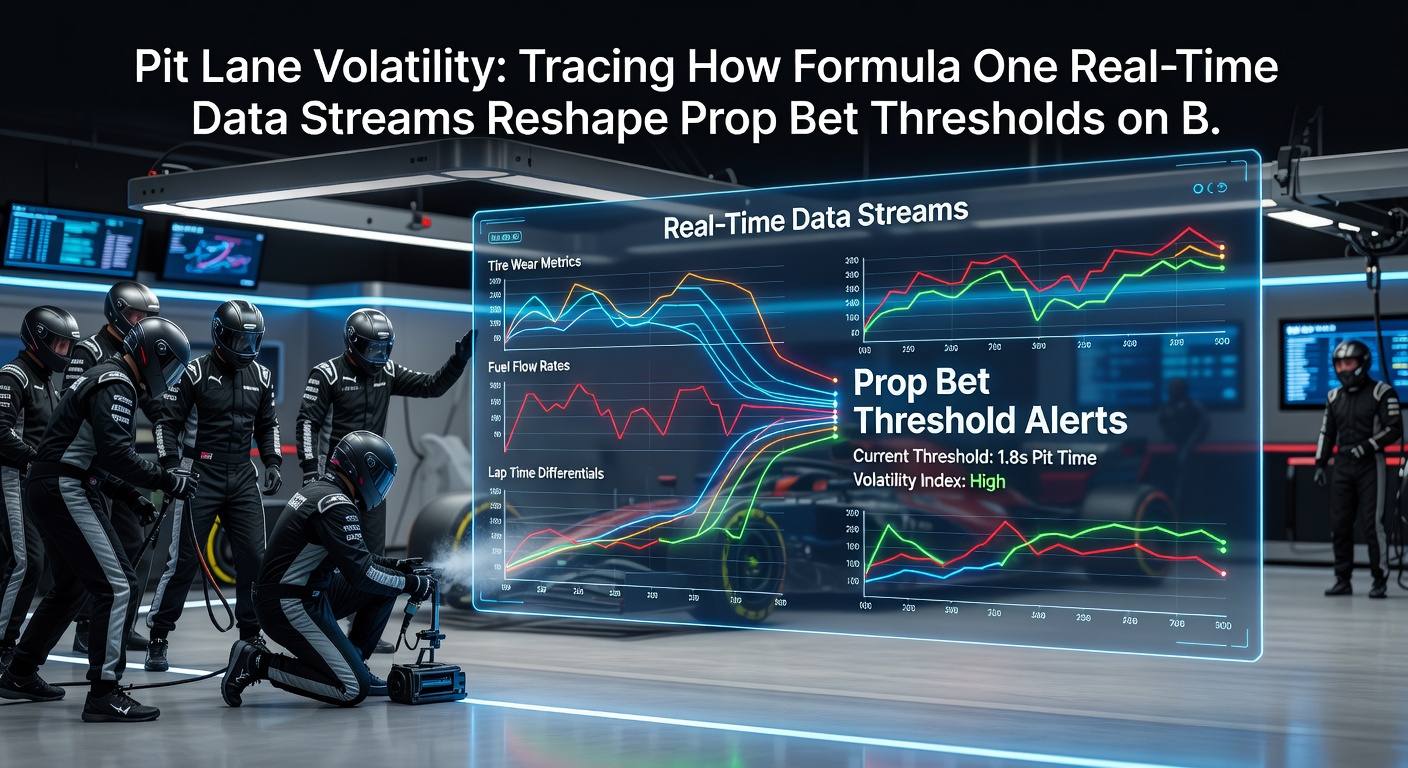
Formula One teams transmit thousands of data points per second from sensors on every car, and these streams reach betting platforms almost instantly through partnerships with timing providers. British exchanges adjust prop bet thresholds on items such as pit-stop duration, tyre compound selection, and sector times within fractions of a second once fresh telemetry arrives. Observers note that this speed creates constant movement in odds that did not exist before widespread adoption of cloud-based data feeds.
Engineers at race control compile lap-by-lap metrics that include fuel flow rates, brake temperatures, and suspension loads, while exchanges pull the same raw numbers through authorised application programming interfaces. When a driver reports a vibration on the radio, algorithms on the exchanges immediately widen or tighten spreads on related props such as whether the car will complete the next stint without another stop. Research indicates that these adjustments occur up to forty times per lap during safety-car periods when uncertainty peaks.
Mechanics of Threshold Adjustments on Exchanges
Prop bet thresholds on British platforms shift according to weighted averages drawn from live telemetry rather than static pre-race models. A sudden drop in tyre degradation readings can push the implied probability of an undercut attempt higher, and the exchange recalibrates the line before the next corner. Data shows that volume on these micro-markets spikes when teams broadcast strategic messages over team radio, because traders interpret those snippets as confirmation of impending changes.
Exchanges maintain separate liquidity pools for each prop, and automated market makers widen spreads temporarily when incoming packets reveal anomalies such as unexpected power-unit mode shifts. Those who monitor the feeds report that the largest swings happen in the window between the pit-lane entry sensor and the actual stop, a period lasting roughly twelve seconds during which no visual confirmation reaches the grandstands. Figures reveal that average price movement on a single pit-stop prop reached 18 percent in the 2025 season, and analysts expect similar ranges to persist into May 2026 when the calendar moves to circuits with longer pit lanes.
Case Examples From Recent Races
Take one instance at a European round where a leading car suffered a slow puncture detected first by pressure sensors rather than the driver. Within four seconds the exchange lowered the threshold for an unscheduled stop from 14 percent probability to 67 percent, and matched volume exceeded £2.4 million before the car entered the pit lane. Another example occurred during a wet-dry transition when real-time track-temperature data contradicted earlier forecasts; exchanges responded by shortening the line on intermediate-tyre usage for several drivers simultaneously.
Traders who specialise in these markets often maintain redundant connections to multiple timing sources to guard against single-point latency. When one feed momentarily lags, the discrepancy itself becomes tradable information because the slower stream reflects older conditions. Industry reports compiled by the European Gaming and Betting Association highlight that latency arbitrage opportunities on F1 props have declined by 31 percent since 2023 as synchronisation standards improved across providers.
Regulatory and Technological Developments Through 2026
By May 2026 several British exchanges plan to incorporate additional data layers that include predictive models trained on historical sensor patterns. These models will flag probable strategy calls before teams announce them, and the exchanges will publish updated thresholds with explicit confidence intervals. Australian regulatory filings on digital wagering platforms show parallel interest in similar technology, suggesting that cross-border standards for data integrity may emerge before the end of the decade.
Exchanges must still comply with rules that separate price formation from inside information, and they publish audit logs that regulators review quarterly. A University of Melbourne working paper on sports-data latency found that British platforms currently achieve sub-800-millisecond updates on F1 props, a figure that continues to improve with 5G rollout at circuits. Observers note that any further reduction will require new agreements between rights holders and timing companies to prevent selective release of information.
Market Participant Responses and Volume Patterns
Professional syndicates deploy scripts that parse both telemetry and radio transcripts in real time, then place layered orders across related props such as fastest sector and pit-stop window. Retail participants often react to visual cues from broadcast footage, creating a lag that professionals exploit. Volume data from the past three seasons indicates that 62 percent of matched stakes on pit-stop props occur in the final twenty laps, when cumulative sensor readings provide the clearest signals.
Yet smaller liquidity pools on niche props such as exact pit-stop order still experience occasional illiquidity when multiple cars pit together. Exchanges counter this by offering partial matching and by seeding markets with house liquidity during high-volatility windows. Those who study the order books report that depth recovers within ninety seconds once the pit lane clears and fresh lap times confirm the strategy outcome.
Conclusion
Real-time Formula One data streams continue to compress decision windows for prop bet thresholds on British exchanges, and the pattern shows no sign of reversal. Teams, timing providers, and platform operators each refine their pipelines to reduce latency while preserving audit trails required by oversight bodies. As the 2026 season advances through its May schedule, participants across the chain will test new synchronisation methods that balance speed with regulatory compliance, and the resulting market behaviour will reflect those technical choices in measurable ways.