4 Mar 2026
Nationwide Reveals Sharp Rise in UK Gambling Activity Through Early 2026, with Top Spenders Averaging £745 Monthly

Tracking the Uptick in Gambling Metrics
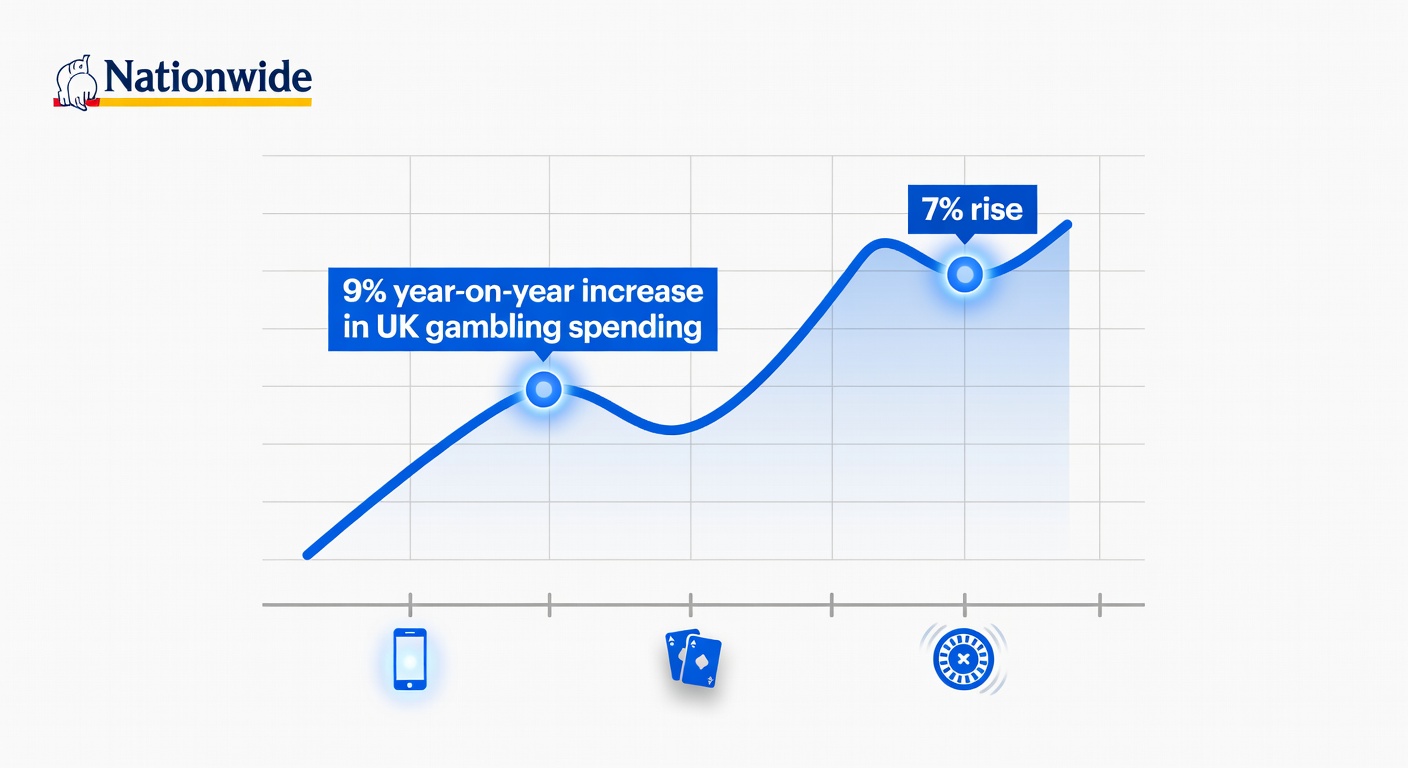
Nationwide Building Society's latest figures paint a clear picture of escalating gambling engagement across the UK, where spending climbed 9% year-on-year from £205.28 million in January 2025 to £224.57 million in January 2026, while transaction volumes rose 7% over the same period; data like this, released in March 2026, highlights how everyday financial patterns shift amid broader economic and cultural influences.
Observers note that such increases aren't isolated, as they coincide with heightened interest in betting platforms, yet the specifics from Nationwide's analysis stand out because they capture real-time debit card usage among millions of customers, offering a ground-level view of where the money flows.
And here's the thing: these numbers emerge from aggregated transaction data, processed through Nationwide's systems that monitor patterns without identifying individuals, which ensures privacy while revealing trends; for instance, the jump from previous baselines suggests gamblers ramped up activity steadily, building toward peaks tied to seasonal sports calendars.
Survey Spotlights Heavy Hitters Among Bettors
A survey of 2,000 gamblers, conducted as part of the March 2026 report, uncovers that the top 10% of participants average £745 per month on gambling, a figure that underscores the concentration of spending among a dedicated subset; what's interesting is how this group drives much of the overall volume, even as casual bettors contribute smaller amounts across wider bases.
Researchers behind the poll found that 68% of respondents plan to increase their betting in 2026, citing major sporting events like the FIFA Men’s World Cup as key motivators, since these tournaments draw global audiences and amplify wagering opportunities through expanded markets and live in-play options.
Take one segment of the data: those in the top spending tier often engage multiple times weekly, blending football matches, horse racing, and emerging esports with traditional slots or casino games, which collectively push monthly outlays to levels that rival household budgets for entertainment; yet, the survey also captures broader sentiments, where even moderate players express optimism about wins tied to high-profile fixtures.
Figures reveal this isn't just hype, as prior World Cups have historically spiked UK betting turnover by double digits, according to industry trackers, setting the stage for 2026 projections that could mirror or exceed those patterns.
Helpline Contacts Signal Growing Concerns
GamCare’s National Gambling Helpline recorded 105,765 contacts throughout 2025, a tally that reflects sustained demand for support amid rising participation rates; by January 2026, referrals to specialized services surged 48% year-on-year to 996, indicating that harm-related issues intensify alongside spending booms.
Experts who've analyzed these calls observe patterns where individuals seek advice on debt management, emotional distress, or family impacts, often after losses accumulate during event-driven betting frenzies; for example, one common thread involves people chasing recoveries on football accumulators, only to deepen cycles that prompt outreach.
But here's where it gets notable: the uptick in referrals aligns temporally with the transaction data from Nationwide, suggesting a direct correlation between accessible betting and subsequent help-seeking, while helpline operators report longer average call durations in early 2026, as callers grapple with World Cup anticipation layered over existing habits.
Data from GamCare shows that while contacts peaked mid-year in 2025 due to summer sports, the January rebound points to year-start resolutions clashing with promotional incentives from bookmakers, creating a perfect storm for vulnerability.
Major Events Fuel the Momentum
The FIFA Men’s World Cup looms large in the survey responses, with 68% of gamblers eyeing increased stakes because of its scale—think packed schedules of matches across time zones, celebrity endorsements, and bookmaker specials that multiply odds for parlays and props; turns out, events like this have long catalyzed UK gambling, as evidenced by 2022's tournament driving a 15-20% uplift in gross gaming revenue per UK Gambling Commission archives.
Nationwide's press release ties these threads together, urging account holders to monitor for signs like frequent small transactions or sudden large withdrawals, since early detection can prevent escalation; people who've implemented self-exclusion tools often credit them with regaining control during such periods.
So, as March 2026 reporting captures this snapshot, the interplay becomes clear: transaction volumes climb because platforms offer seamless apps and cash-out features, spending rises with perceived event value, and helplines brace for overflow, all while top-tier bettors sustain the averages that make headlines.
One study from similar past cycles revealed that during World Cups, average bets per user jump 25-30%, with the top decile pushing boundaries further through VIP schemes or high-roller lounges, although regulatory caps like stake limits on slots temper some excesses.
Patterns and Broader Financial Ripples
Delving deeper into Nationwide's dataset, the 7% transaction volume increase—from baseline volumes implied in the spending shift—signals more frequent engagement rather than just bigger bets; casual users might place a quick punt on a Premier League halftime score, whereas heavy spenders layer multiple selections, turning single games into marathon sessions.
What's significant is the £19.29 million net spending gain over one year, a increment that, when scaled across the population, contributes to the £15 billion-plus annual UK gambling economy, per official estimates; observers tracking debit trends note that mobile wallets accelerate this, with contactless payments enabling impulse wagers at pubs or on commutes.
Yet, the GamCare metrics add nuance, as that 48% referral spike in January 2026—hitting 996 cases—often stems from post-holiday financial strains compounded by football futures markets opening early; callers frequently mention the top 10% benchmark, recognizing their own trajectories mirror those averages before seeking intervention.
And while the survey's 2,000 voices represent a cross-section, their plans to bet more resonate widely, especially since 2026's calendar packs Euro qualifiers alongside World Cup build-up, keeping adrenaline high and ledgers active.
Conclusion
Nationwide's March 2026 disclosure crystallizes a pivotal moment for UK gambling, where 9% spending growth to £224.57 million, 7% more transactions, £745 monthly averages for the top 10%, 68% intending bigger bets on the World Cup, and GamCare's 105,765 annual contacts with 48% referral jumps in January all converge to depict acceleration; these elements interconnect seamlessly, from transaction logs to helpline logs, underscoring how sports spectacles propel activity while support networks scale to match.
Data indicates sustained monitoring remains key, as patterns like these recur with event density, equipping stakeholders—from banks to charities—with actionable insights to navigate the upswing responsibly.