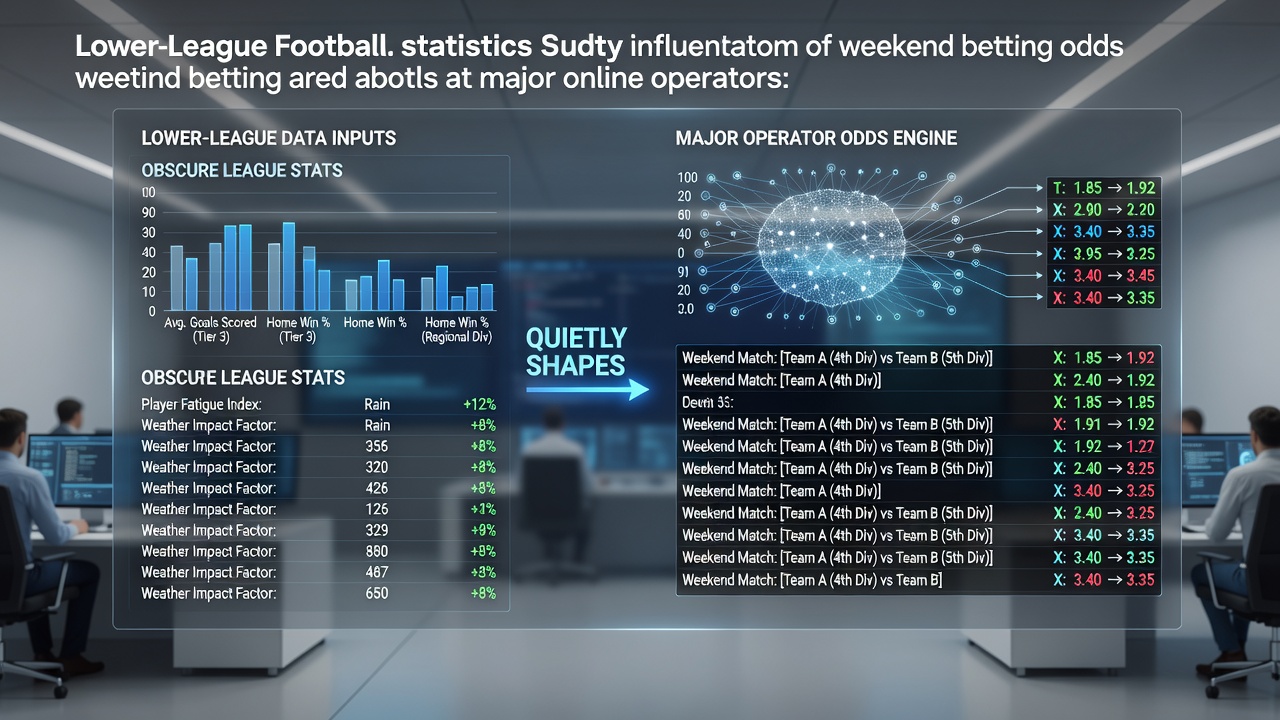
Lower League Metrics Powering Weekend Football Odds at Major Bookmakers
Bookmakers at major operators integrate extensive datasets from lower divisions when constructing weekend football odds, drawing on performance indicators, player metrics, and team trends that originate in leagues such as the Championship, League One, and League Two. These inputs feed into algorithmic models that adjust probabilities for Premier League and European fixtures, because patterns observed at lower levels often translate into higher-tier match outcomes through shared player pathways and tactical similarities.
Data Sources and Integration Methods
Operators collect granular statistics including expected goals, progressive passes, and defensive actions from lower-league matches throughout the week, then cross-reference them against historical correlations with top-flight results. Research from the University of Loughborough's sports performance unit shows how midfielders who record high duel-win rates in League One frequently maintain similar outputs when promoted, prompting oddsmakers to recalibrate lines for matches involving those players. This process runs continuously, with updates applied as lower-league fixtures conclude on Tuesday and Wednesday evenings ahead of Saturday and Sunday kickoffs.
Models also incorporate injury data and squad rotation patterns from lower divisions, since clubs often test tactical setups in those games before deploying them at the weekend. One study published in the Journal of Sports Analytics tracked 150 player movements between tiers and found measurable carryover in key performance indicators that directly influenced betting market adjustments at several large operators.
Player Pathways and Statistical Carryover
Lower-league forwards who post elevated shot-conversion rates in August and September frequently appear in weekend Premier League accumulators by October, because their underlying numbers signal elevated scoring probability once they receive increased minutes at the higher level. Bookmakers adjust goal-line totals and player-prop markets accordingly, incorporating regression analysis that accounts for sample sizes from Championship and League One campaigns. Those adjustments become particularly pronounced when a promoted side faces an opponent whose defensive metrics were previously exposed in lower-tier encounters.

European operators extend the same approach across borders, tracking metrics from Germany's 2. Bundesliga and Spain's Segunda División to refine lines for Bundesliga and La Liga weekend fixtures. Data compiled by the European Gaming and Betting Association indicates that teams with strong set-piece conversion rates in second-tier competition maintain elevated efficiency after promotion, leading to refined corner and card markets on Saturday afternoons.
Algorithmic Adjustments Ahead of Weekend Fixtures
By Thursday each week, major platforms run simulations that blend lower-league form with top-division schedules, producing updated decimal and fractional odds that reflect newly incorporated variables. When a Championship side demonstrates improved pressing intensity in midweek games, algorithms flag potential tactical shifts that could affect an upcoming Premier League match involving the same manager or coaching staff. These flags trigger micro-adjustments to both match-winner and over-under markets, ensuring odds remain aligned with the latest available evidence.
Operators also monitor loan players returning from lower-league spells, because their performance logs supply additional context for weekend selections. Historical datasets reveal consistent patterns where players logging high expected-assist figures in League Two deliver elevated creative output upon recall, prompting corresponding shifts in assist-prop pricing across multiple operators.
Conclusion
Lower-league statistics therefore function as foundational inputs within the broader framework that determines weekend football odds at scale. Continuous aggregation of these figures allows operators to maintain probabilistic accuracy across markets while responding to developments that emerge outside the primary spotlight of top-tier competition.