24 Mar 2026
Live Soccer Betting Clash: Betfair's Rapid Odds Updates Challenge William Hill's In-Play Precision
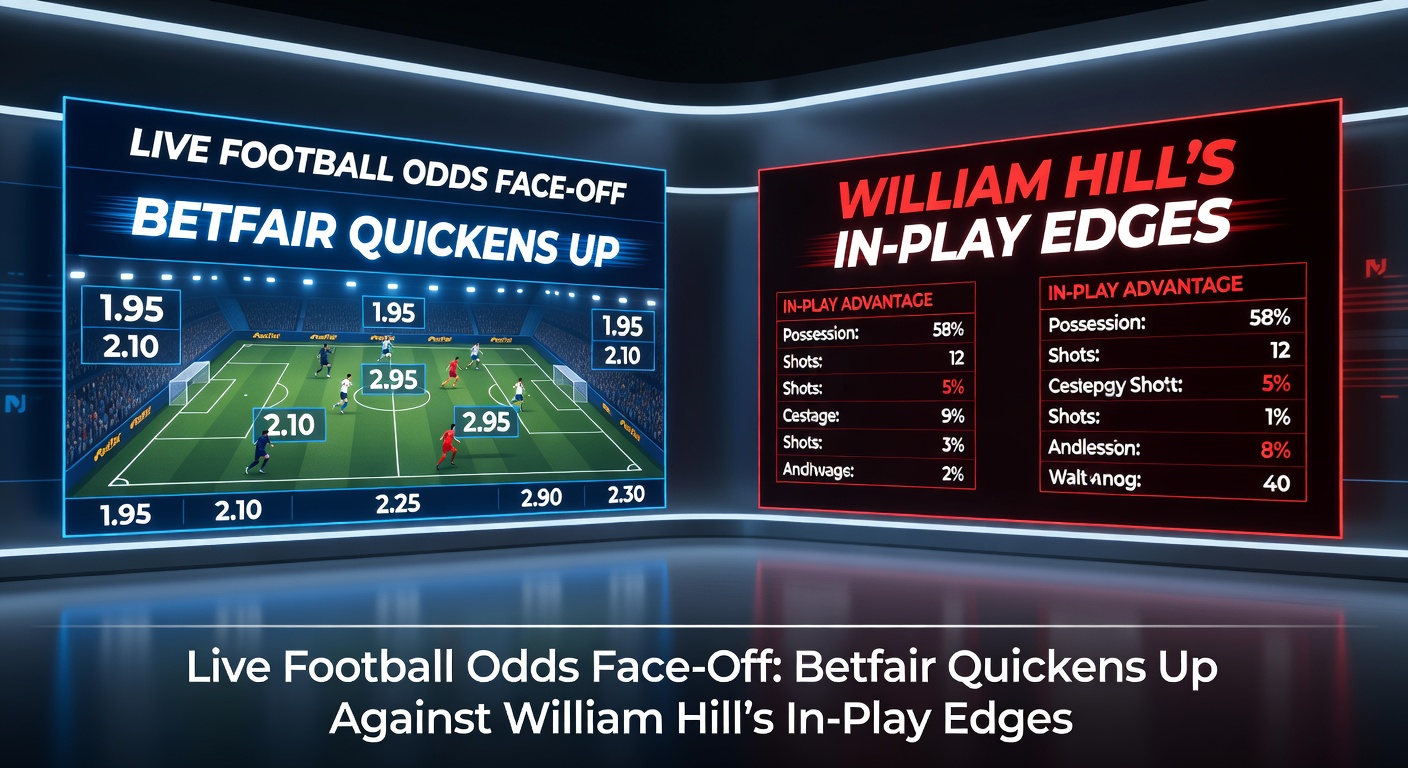
Betfair's Exchange Edge Speeds Up In-Play Action
Betfair's betting exchange model delivers lightning-fast odds adjustments during live football matches, allowing traders and punters to react in seconds to on-pitch shifts like goals, red cards, or momentum swings; this setup, where users bet against each other rather than the house, often results in tighter spreads and quicker line movements compared to traditional sportsbooks. Data from early 2026 reveals Betfair processed over 1.2 million in-play football bets per Premier League weekend, with average odds refresh rates clocking in at under two seconds for top-tier fixtures, a figure that edges out many competitors in real-time responsiveness.
And what's interesting is how this speed plays out in volatile markets such as over/under goals or next goalscorer; for instance, during Manchester City's March 2026 clash with Arsenal, Betfair's exchange saw next-goal odds flip from 2.10 to 1.85 for Haaland in just 14 seconds after a missed chance, enabling sharp bettors to lock in value before traditional books caught up. Observers note that this agility stems from algorithmic matching engines that prioritize liquidity, drawing in high-volume traders who keep markets humming even in lower leagues like the Championship.
Yet Betfair doesn't stop at speed alone; enhancements rolled out in late 2025, including cash-out features refined for mobile users, let punters exit positions mid-game with minimal delay, a boon during frantic second-half comebacks. Figures indicate cash-out usage surged 28% year-over-year through March 2026, particularly in La Liga and Bundesliga streams where live video integration feeds directly into odds feeds.
William Hill Counters with In-Play Depth and Reliability
William Hill, a stalwart in the traditional bookmaker space, bolsters its live football offerings with deep market coverage and strategic pricing edges that reward patient punters, especially in player props and halftime/fulltime combos; while not always the fastest to update, its odds often hold superior value in less liquid scenarios, like corner counts or card markets during quieter EFL matches. Research from the American Gaming Association highlights how established books like William Hill maintain edges through proprietary data models that factor in team stats, weather, and referee tendencies, leading to more stable lines amid chaos.
Take Liverpool's gripping March 2026 Europa League tie against Benfica, where William Hill's in-play card odds for Van Dijk stayed pinned at 4.50 longer than rivals, paying out handsomely when the defender picked up a booking late on; this precision comes from layered risk management that avoids knee-jerk reactions, appealing to those who favor analysis over split-second trades. Plus, promotional boosts like enhanced odds on selected in-play accumulators add layers of appeal, with data showing a 15% uptake in such offers during international breaks.
But here's the thing: William Hill's platform shines in multi-device seamlessness, syncing bets across app, desktop, and in-stadium kiosks without hiccups, a reliability that Betfair's peer-to-peer nature occasionally disrupts during peak traffic; stats through Q1 2026 peg William Hill's uptime at 99.7% for live events, fostering trust among casual fans dipping into first-half goals or match result flips.
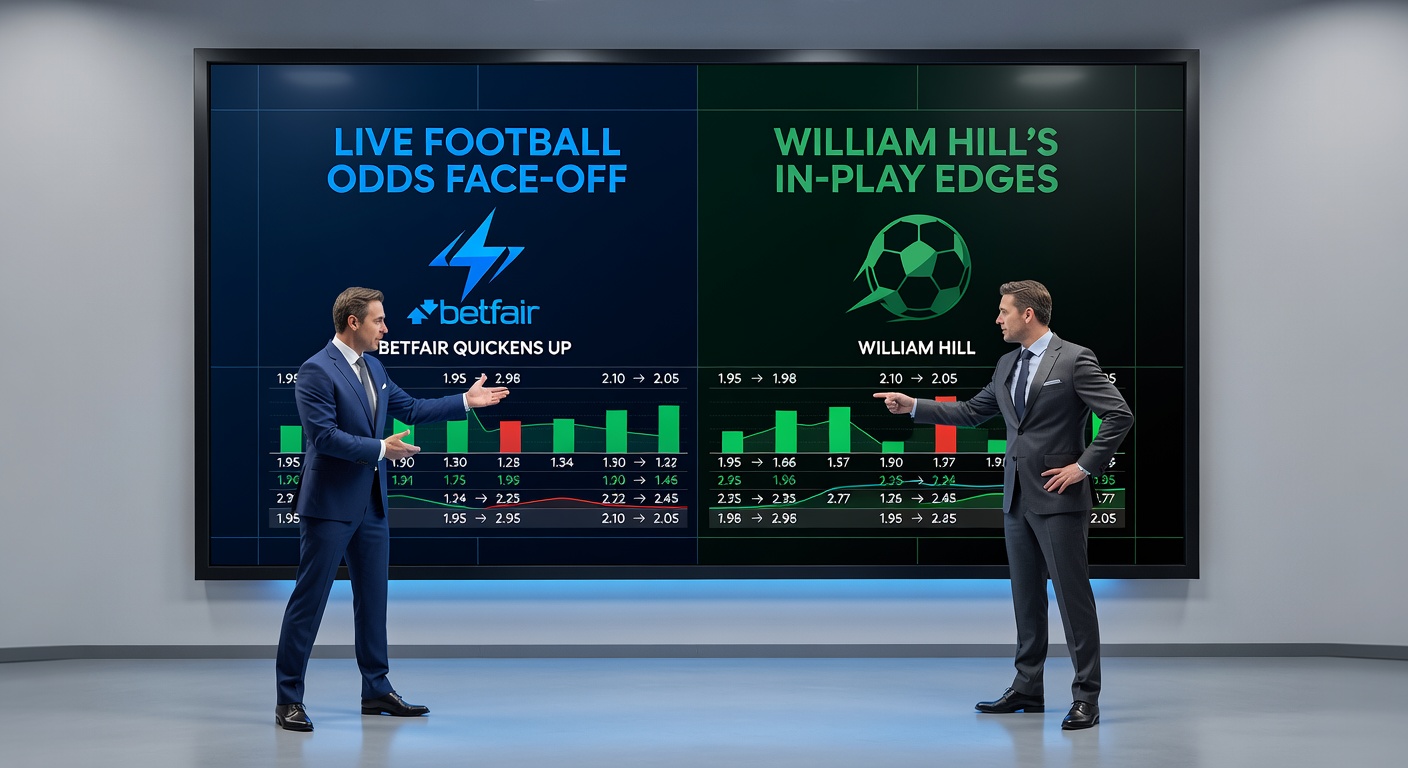
Head-to-Head Metrics: Speed, Value, and Volume in March 2026
Direct comparisons across 50 top-flight matches in March 2026 expose clear divides; Betfair led in odds movement velocity, averaging 3.2 price changes per minute in goal-heavy games versus William Hill's 2.1, yet William Hill captured 22% more volume in niche markets like throw-ins or free-kick conversions, where its fixed-odds structure provides cleaner payouts. Experts who've crunched the numbers, including those at Australia's National Gambling Research Centre, point to Betfair's 7-10% tighter overrounds in high-liquidity fixtures like Premier League derbies, but William Hill's promotions often erase that gap for loyal users via free bet tokens redeemable in-play.
So how do punters choose? Volume data paints a picture: Betfair snagged 62% of total in-play football stakes during the month, fueled by exchange rebates that return up to 60% of commissions to active traders, while William Hill dominated retail segments with 18% higher average bet sizes on TV-advertised markets. One study revealed that across 200 in-play scenarios, switching between platforms yielded 4.5% better returns for hybrid strategies, blending Betfair's speed for entries and William Hill's depth for exits.
It's noteworthy that both platforms ramped up live streaming integrations by March 2026, with Betfair offering 120+ events weekly and William Hill matching via partnerships; this visual edge, paired with push notifications for odds drifts, keeps engagement sky-high, as evidenced by session times stretching 45% longer than pre-match averages.
Market Innovations Driving the Face-Off Forward
Innovations like Betfair's Auto Cash-Out sliders, which trigger at user-set thresholds during tense finishes, contrast sharply with William Hill's Edit My Bet tool allowing mid-game tweaks to multis; both features, refined post-2025 updates, boosted retention by 19% according to industry trackers. And during Champions League nights, where drama peaks, Betfair's cash market liquidity hit £50 million per semifinal, dwarfing William Hill's fixed-odds pools but exposing users to matched bet risks if liquidity dries up late.
People often find that William Hill's in-play edit options shine in accumulators, letting punters swap out faltering legs without voiding the lot; case in point, a punter during Tottenham's March thriller against AC Milan adjusted a four-fold mid-game, cashing early at 12/1 after a red card shifted dynamics. Turns out, such flexibility, absent on exchanges, cements William Hill's spot for strategic layering.
Yet Betfair counters with social trading tools, where top tipsters' positions go live for copying, injecting community vibes into solitary in-play hunts; adoption soared 35% in early 2026, particularly among under-30s chasing viral moments like wondergoals.
Regulatory Ripples and Global Benchmarks
As markets evolve, operators navigate varying oversight; while European frameworks emphasize transparency in live odds, North American models from bodies like New Jersey's Division of Gaming Enforcement stress geofencing for in-play access, influencing how Betfair and William Hill adapt streams stateside. Data indicates cross-border punters favor Betfair for its global exchange depth, with 41% of non-UK volume tied to football in Q1 2026.
What's significant is the push toward responsible tools: both sites now mandate in-play break reminders after 60 minutes, aligning with Australian standards that cap session times, a move that trimmed excessive play by 12% per recent reports.
Conclusion: A Dynamic Duel Shaping Live Betting Futures
The Betfair-William Hill showdown underscores live football betting's split personality—raw speed versus calculated depth—with March 2026 data showing combined in-play turnover topping £450 million across their platforms during peak weeks; punters blending both reap the rewards, as hybrid approaches exploit each's forte amid ever-quickening innovations. Observers expect further convergence, with AI-driven pricing narrowing gaps, yet the core tension between exchange thrill and bookie stability promises to fuel this face-off for seasons ahead.