Cricket Micro-Markets Drive Dynamic Wager Shifts Across International Betting Platforms
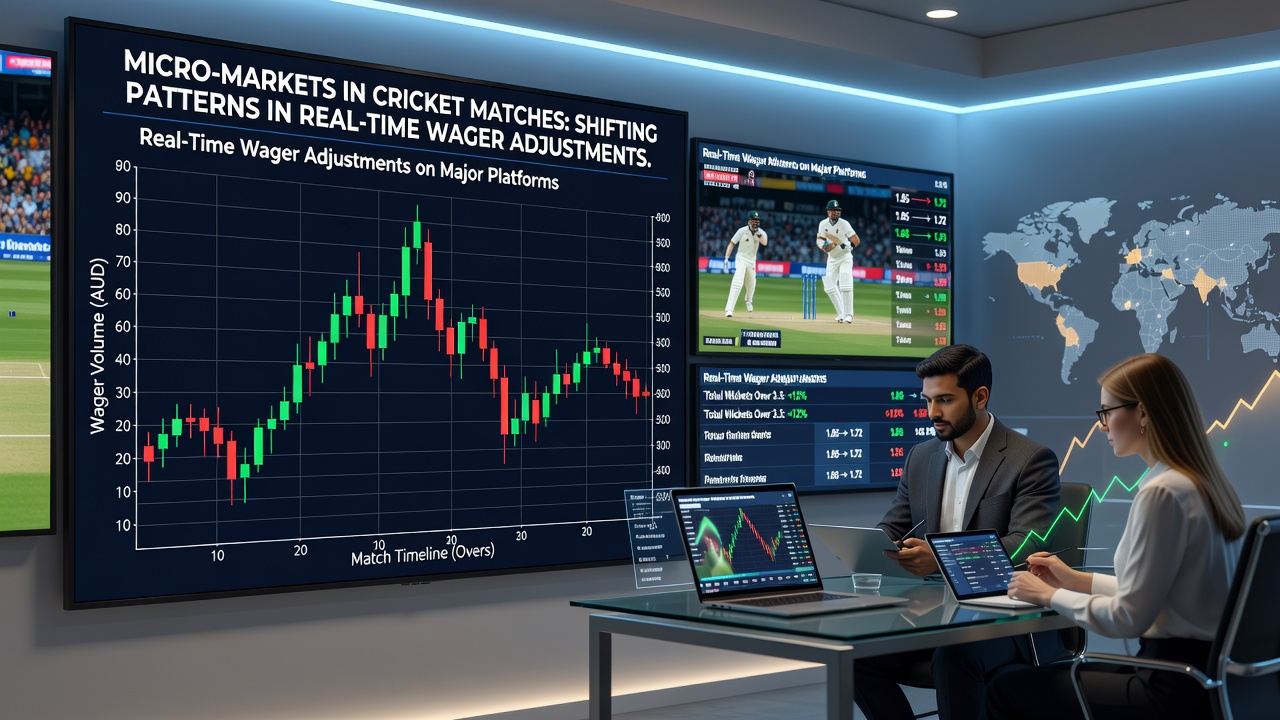
Cricket's micro-markets have expanded rapidly in recent seasons, and platforms now adjust wagers in real time based on ball-by-ball data feeds. These granular offerings include next-over run totals, individual bowler economy rates within specific spells, and fielder positioning probabilities that update after each delivery. Data from global exchanges shows volume in these segments rising steadily through the first half of 2026, particularly during T20 and one-day international fixtures.
Platform Mechanics Behind Real-Time Adjustments
Major operators integrate multiple data streams from official scorers and proprietary sensors, then recalculate odds within seconds of each event. When a batsman survives the first three balls of an over without scoring, algorithms often shift implied probabilities for the remaining deliveries, and bookmakers respond by widening or tightening spreads accordingly. Observers note that this process relies on low-latency connections between stadium feeds and trading desks, allowing liquidity providers to hedge positions across correlated micro-markets before the next ball is bowled.
One platform recorded over 180,000 micro-market transactions during a single India versus Australia T20 series in early 2026, with average adjustment intervals dropping below four seconds in high-liquidity periods. Such speed creates feedback loops where initial wagers influence subsequent pricing, and traders monitor order flow to detect momentum shifts that may precede larger market movements.
Observed Patterns in Wager Behavior During July 2026 Fixtures
Through July 2026, analysts tracking several major tournaments documented recurring sequences in which micro-market activity clusters around powerplay overs and death bowling phases. Bettors frequently move positions after the first two overs of an innings, prompting platforms to adjust lines on run-rate derivatives while the over remains in progress. Research indicates these clusters coincide with broadcast graphics that highlight live statistics, drawing additional volume from casual participants who monitor multiple micro-markets simultaneously.
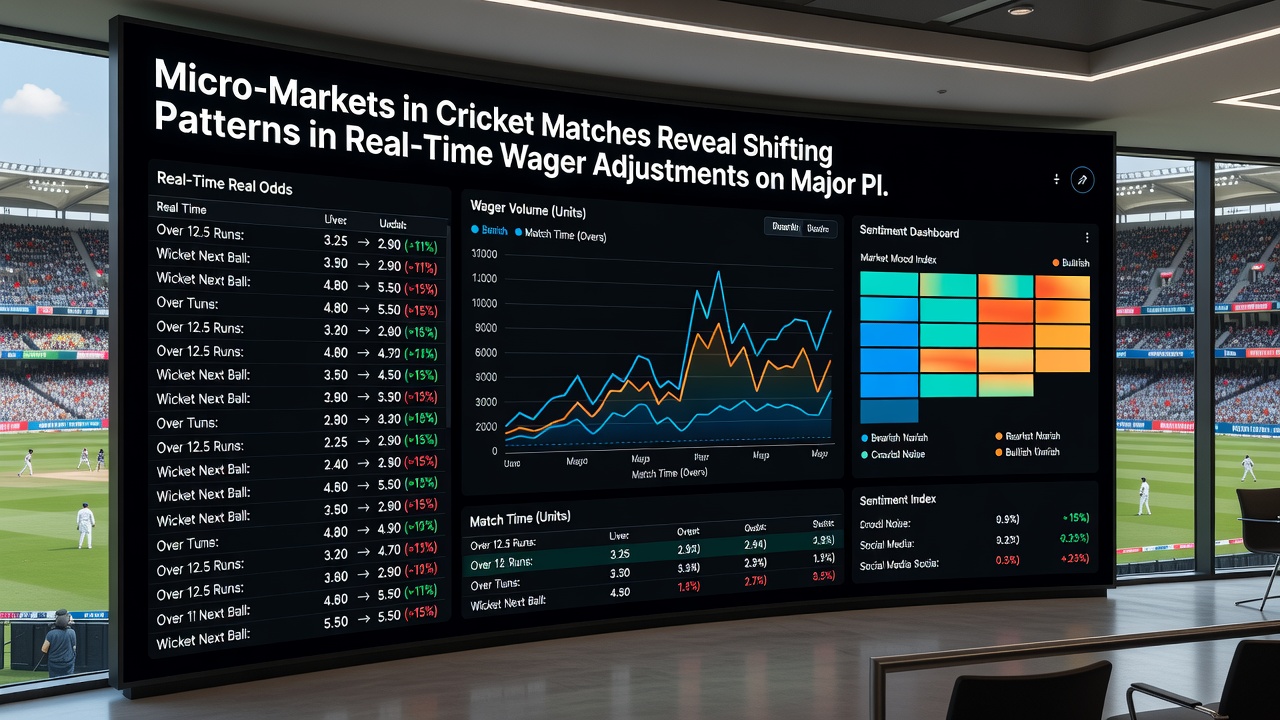
Patterns also emerge around player-specific milestones. When a bowler claims an early wicket, markets tied to that individual's remaining over totals often tighten within two deliveries, and volume in related segments such as economy-rate brackets increases correspondingly. Figures from independent monitoring services show these adjustments occur faster on exchanges than on traditional fixed-odds sites, because peer-to-peer matching allows prices to reflect available liquidity rather than house-imposed margins alone.
Regional Data Sources and Industry Reports
According to reports published by the Australian Gambling Research Centre, cricket micro-market participation in licensed Australian accounts grew by double-digit percentages year-over-year through mid-2026. Separate analysis from the Responsible Gambling Council in Canada examined cross-border traffic patterns and found similar spikes during overlapping international series, suggesting participants access multiple platforms to compare adjustment speeds. These studies rely on anonymized transaction logs rather than self-reported surveys, providing quantitative insight into timing and volume without revealing individual identities.
Industry groups have begun publishing comparative benchmarks that measure how quickly different operators reflect new information across micro-markets. One July 2026 dataset covering five major platforms illustrated variance of up to 1.8 seconds in update latency during peak periods, and liquidity depth varied significantly between exchanges and sportsbook operators. Platforms with deeper order books tend to exhibit smaller immediate price swings after each ball, whereas thinner markets can move several percentage points on modest stake sizes.
Technological Infrastructure Supporting Continuous Updates
Behind the visible odds boards lie distributed computing environments that ingest ball-tracking data, weather variables, and historical performance matrices. Engineers at several operators have described modular systems capable of recalculating thousands of dependent micro-markets in parallel, ensuring that a change in one line automatically propagates to correlated offerings such as match-winner probabilities or total-run projections. This interconnected structure means a single wicket can trigger cascading adjustments across dozens of active wagers within the same over.
Testing conducted ahead of the 2026 season confirmed that failover mechanisms maintain pricing continuity even when primary data feeds experience brief interruptions. Redundant sensors at venues and backup statistical models allow platforms to sustain micro-market trading without halting activity, although some exchanges temporarily widen spreads during such events to manage risk until full data integrity returns.
Conclusion
Micro-markets in cricket continue to evolve alongside improvements in data transmission and algorithmic pricing. Real-time wager adjustments now form a core component of live betting ecosystems on international platforms, and patterns observed through July 2026 indicate sustained growth in transaction frequency during major tournaments. Regulatory bodies and research organizations from multiple regions continue to monitor these developments through transaction-level data, providing ongoing visibility into how participants interact with rapidly changing odds across different jurisdictions.