
Cash-Out Mechanics in Multi-Selection Football Markets: Thresholds and Platform Variations
British betting operators apply structured systems to determine when and how much cash-out value becomes available on multi-leg football markets, where each additional selection compounds both potential returns and risk exposure. These systems rely on real-time odds feeds, remaining leg probabilities, and predefined platform algorithms that recalculate offers continuously as matches progress. Observers note that thresholds often emerge from minimum payout floors set by operators to manage liability, while some platforms require a set number of legs to settle before cash-out activates at all. The core calculation starts with the original stake multiplied by updated decimal odds for unsettled legs, then adjusted downward to account for the bookmaker's margin and any early settlement fees embedded in the offer. Data from industry reports shows that football accumulators with four or more legs typically see cash-out values fluctuate more sharply because each live result shifts the probability curve dramatically. Operators update these figures every few seconds during active matches, yet they retain the right to pause or withdraw offers when volatility spikes beyond internal risk parameters.Platform-Specific Threshold Rules in Action
Different British sites enforce distinct entry points for cash-out eligibility on multi-leg football bets. One major operator activates the feature only after the first leg resolves successfully, whereas another permits partial cash-out on unsettled accumulators from the moment the bet is placed. These variations stem from proprietary risk models that weigh historical payout data against current market exposure, and researchers have documented how such differences influence punter behavior across sites.
What's interesting is how settlement thresholds interact with in-play adjustments, since a cash-out offer might drop below the original stake if two legs have already failed despite later legs showing favorable odds. According to figures from the European Gaming and Betting Association, multi-leg football products generated over £4.2 billion in turnover during the 2025 season, with cash-out usage rates climbing above 38 percent on accumulator tickets. This volume underscores why platforms maintain tight controls on minimum cash-out amounts, often setting floors around £0.50 to £2.00 depending on the original stake size.
Live Odds Integration and Threshold Triggers
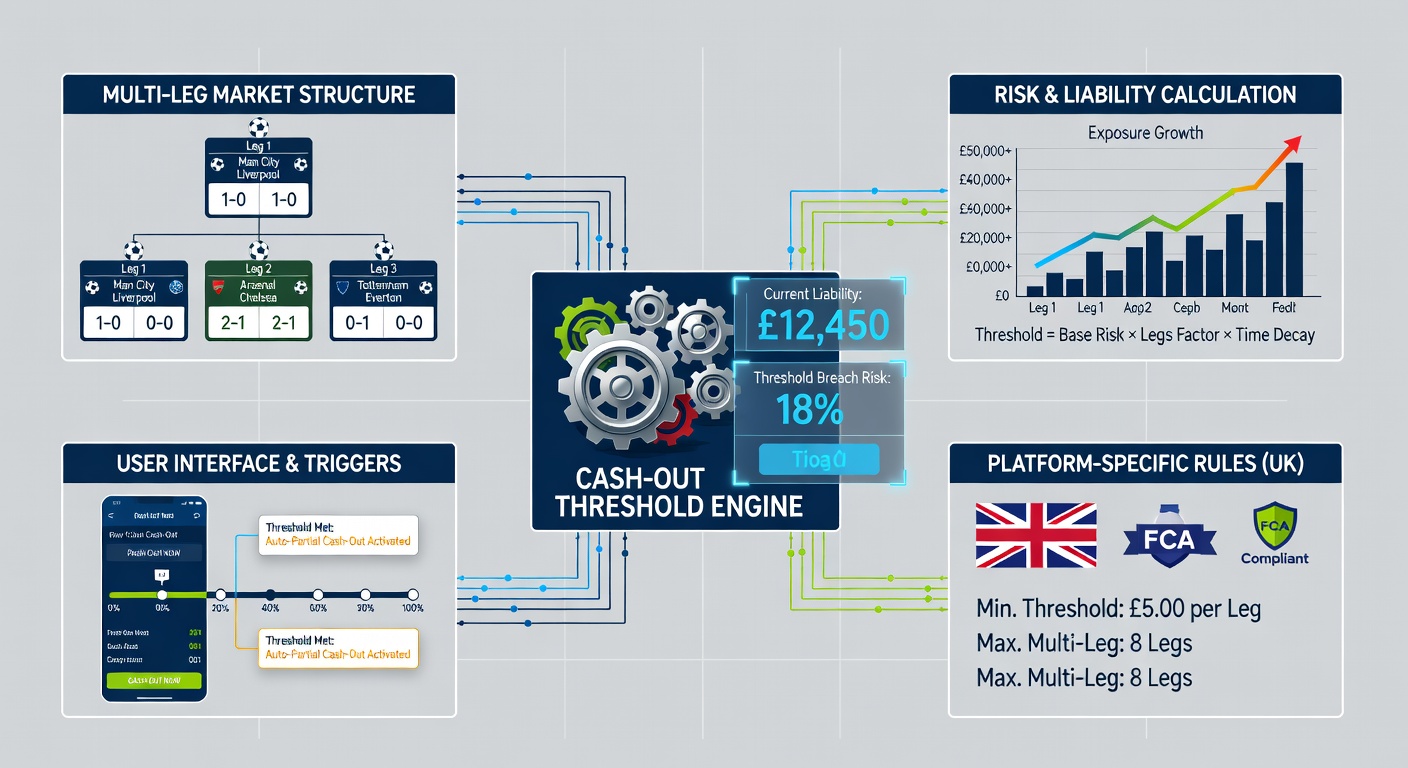 Operators pull live odds from multiple data providers to recalculate cash-out values, yet they layer additional buffers that prevent offers from exceeding certain percentages of the theoretical maximum return. Take one accumulator where three of five legs have settled correctly: the platform might display a cash-out figure that represents only 65 percent of the running profit, because remaining legs carry implied probabilities that still include house edge deductions. Such buffers function as internal thresholds that protect operator margins while still giving customers an exit route before final whistle.
Studies from the Canadian Centre for Gaming Research indicate that similar threshold mechanics appear in North American sportsbooks, although British implementations tend to apply more granular leg-by-leg adjustments. The reality is that sudden score changes in evening Premier League fixtures can trigger immediate re-pricing, sometimes pushing a previously attractive cash-out offer below the minimum threshold within seconds and forcing the customer to wait for the next update cycle.
Regulatory Context and May 2026 Adjustments
Beginning in May 2026, updated advertising and transparency requirements will require British operators to display clearer cash-out threshold information at the point of bet placement. These forthcoming rules aim to standardize how minimum offer values and withdrawal conditions appear across platforms, without altering the underlying mathematical models. Industry analysts expect the changes to reduce disputes over vanished offers, since operators must now publish the specific conditions under which cash-out becomes unavailable mid-market.
Yet the core mechanics remain driven by algorithmic risk management rather than external mandates, so platforms continue to refine their formulas based on seasonal performance data. One study revealed that accumulators involving both domestic and European football legs experience wider cash-out volatility because cross-competition scheduling creates unpredictable timing overlaps that algorithms must accommodate in real time.
Conclusion
The intricate mechanics behind cash-out thresholds in multi-leg football markets on British platforms rest on continuous probability recalculations, platform-specific eligibility rules, and protective margin buffers that evolve with live data. As the 2026 regulatory updates approach, these systems will gain greater visibility while retaining their fundamental structure of balancing customer flexibility against operator risk controls. Observers continue to track how threshold variations across sites shape betting patterns, particularly during high-volume periods when multi-leg football products dominate daily turnover.